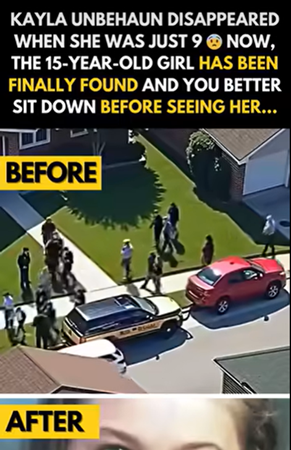
The soft glow of an early spring afternoon settled over Asheville, North Carolina, casting golden light across the Blue Ridge Mountains and turning the air inside a small retail shop warm and peaceful.
Shoppers drifted between aisles. A baby cried somewhere near the back. A barcode scanner beeped rhythmically as the world moved in the quiet, predictable routines of a Saturday afternoon.
And then—everything changed. A young cashier, barely in her twenties, lifted her head from scanning a customer’s purchase. The day had been ordinary, almost forgettable, until that moment.
Because standing in front of her was a girl—quiet, reserved, slightly withdrawn—whose face pulled at a memory buried deep in the back of the cashier’s mind.
A memory from a documentary episode she had watched late at night. A face she had seen on missing-child posters. A face that hadn’t left her since.
For a moment, she tried to shake off the feeling. It couldn’t be. It was impossible. Kids don’t just reappear six years after vanishing without a trace.
But the longer she looked, the more the impossible shifted into something else—something terrifying and familiar.
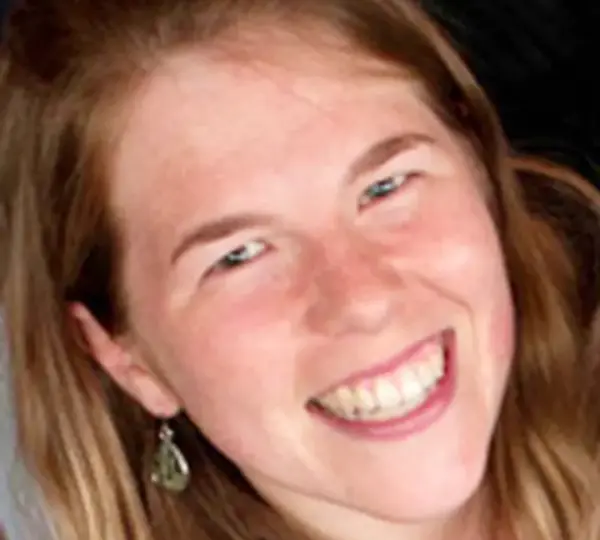
Her mind raced.
It can’t be her… but what if it is?
What if the girl who disappeared on a Fourth of July weekend in Illinois is standing right here in front of me?
That single moment of recognition would unravel a six-year mystery, reunite a fractured family, and remind an entire nation that sometimes—against all reason—hope survives.
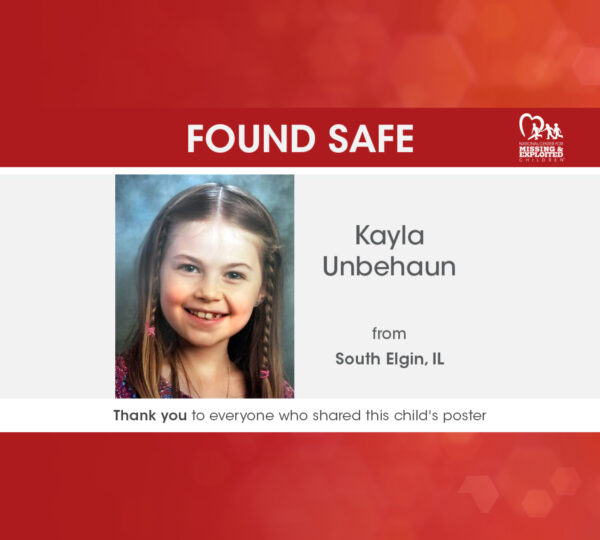
Her name was Kayla Unbehaun.
A Normal Day That Turned Into Every Parent’s Nightmare
To understand the magnitude of that moment in Asheville, you must return to the summer of 2017.
It was July 4 in South Elgin, Illinois—a town filled with fireworks, flags, parades, and the joy of family gatherings. Kayla was nine years old, bright, sweet, loved by both of her parents. Though her parents were no longer together, they shared the delicate arrangement of custody schedules, pickup times, and weekend visits—co-parenting in the best way they could.
Six days later, the Fourth of July glow had faded, replaced by everyday routines. Kayla’s father, Ryan Iskerka, arrived at their arranged meeting spot to pick up his daughter, expecting her to run into his arms like always.
But she didn’t.
Kayla wasn’t there.
Minutes became hours.
Calls to her mother, Heather Unbehaun, went unanswered.
Police were contacted.
Panic began its slow burn.
By the end of the day, the truth became devastatingly clear:
Kayla and her mother were gone.
They had simply vanished.
The Case: A Parental Abduction Hidden Behind Ordinary Life
The disappearance was immediately categorized as a parental abduction—a case more common than many realize, yet often overlooked in public consciousness.
According to the National Center for Missing & Exploited Children (NCMEC), of nearly 30,000 missing-child reports in 2020, around 5%—roughly 1,500 cases—were family abductions.
These cases often slip through the cracks.
They aren’t always viewed with the same urgency as stranger abductions.
The public doesn’t react the same way.
Media outlets rarely dedicate resources to them.
Amber Alerts are sometimes withheld because “the parent has the child.”
But abduction is abduction.
Children in these situations may be:
• taught false information
• hidden from school systems
• isolated from extended family
• moved across state lines
• shielded from technology
• instructed not to trust law enforcement
Kayla’s case fit this pattern. Investigators later determined she and her mother may have passed through Oregon, Wisconsin, and finally North Carolina—each place a temporary landing spot in a long journey of evasion.
For Ryan, the days following her disappearance were the beginning of a nightmare that stretched into years.
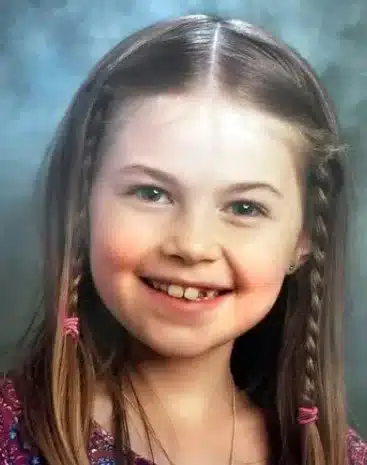
“It was devastating,” he said. “Every day felt longer than the last.”
He kept her room untouched.
Kept her belongings where she left them.
Kept the hope alive even when leads ran cold.
The ache of not knowing consumed him.
The Role of Media: The Missing Piece That Would Later Save Her
Years passed.
Tips faded.
Posters yellowed.
Investigators followed every thread until each one dissolved
But something else—something small, subtle, almost accidental—was happening.
In 2022, Netflix released a new season of Unsolved Mysteries. At the end of one episode, a series of missing children’s photos flashed across the screen. It lasted only moments—seconds, even.
Kayla’s picture was among them.
Millions saw it. Even if they didn’t remember her name, the face planted itself somewhere inside their memory. A quiet, lingering imprint.
Media analysts often say missing-child cases must be re-seen to be found. The brain retains faces far more easily than names or details. And once a viewer locks onto a photograph—especially of a child—the recognition can stick for years.
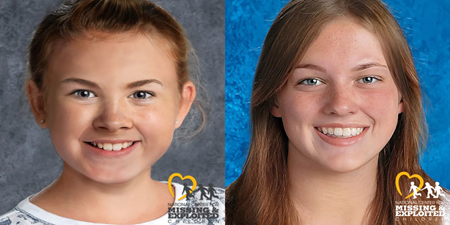
This is why age-progressed images and public re-sharing matter.
This is why NCMEC pushes for continuous awareness.
This is why missing children should never fade from view.
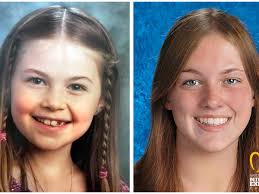
Kayla’s face stayed with someone.
Someone who would one day change everything.
Asheville, North Carolina — The Day Everything Shifted
Back inside that Asheville retail store, the cashier couldn’t ignore the unease bubbling in her chest. The girl in front of her wasn’t nine anymore. She looked around fourteen or fifteen. But the resemblance—the eyes, the chin, the quiet way she held herself—was unmistakable.
She discreetly alerted her manager. The manager took one look at the mother and daughter and felt the same jolt of recognition.
A call was made.
“Hello… I think we might have a missing child in our store.”
The Asheville Police Department didn’t hesitate. They arrived swiftly, quietly, carefully—aware that the safety of the possible victim was paramount.
And then came the confirmation.
The girl was indeed Kayla Unbehaun, missing from Illinois for nearly six years.
She was safe.
She was unharmed.
She was found.
It was surreal.
One second she was a stranger in a checkout line.
The next, she was a child whose face the nation had once searched for.
The Reunion — A Father’s Dream Finally Returned to Him
Kayla was placed into the care of North Carolina’s child protective services. Arrangements were initiated. Paperwork was completed. Interviews were conducted.
And then, at long last, she traveled home to Illinois.
Her father, Ryan, waited—heart pounding, knees shaking, unsure if he would even recognize the young woman walking toward him. He had lost birthdays, school years, milestones, memories, and childhood moments that could never be reclaimed.
But the moment he saw her…
Everything broke inside him.
Every fear.
Every wound.
Every unanswered question.
He opened his arms. She walked into them. And the world briefly made sense again.
Their embrace wasn’t just a hug—it was a reunion of two souls torn apart by circumstances neither of them controlled.
Ryan later released a short statement:
“I’m overjoyed that Kayla is home safe.
We ask for privacy as we get to know each other again and navigate this new beginning.”
Imagine it:
The hesitation.
The tears.
The flood of questions.
The relief that overpowered everything.
The beginning of healing.
The beginning of rebuilding trust.
The beginning of rediscovering each other.
Because reunification is not just physical—it is emotional, psychological, deeply human.
Why This Case Matters — Beyond One Girl, One Father, One Story
Kayla’s story is more than a family reunion.
It is a powerful reminder of:
1. The importance of keeping missing children in public view.
A single image on a Netflix show sparked the recognition that ended six years of searching.
2. The strength of community vigilance.
One worker paid attention. One worker cared enough to speak.
3. The reality of parental abductions.
Most Amber Alerts involve family disputes—not strangers.
4. The hope that survives time.
Even when years have passed, reunification can happen.
5. The power of media exposure.
NCMEC confirms: visibility saves lives.
Kayla’s story is proof.
The Unseen Years — A Journey Through Silence
What were those six years like for Kayla?
No one knows the full truth.
But experts say children abducted by a parent often experience:
• new identities
• frequent relocations
• sudden changes in schools
• social isolation
• limited technology
• fear of talking to strangers
• psychological confusion
• loss of support systems
Kayla lived an entire childhood in the shadows—an adolescence without stability, without normalcy, without her father.
Her healing now will take time, guidance, and gentle patience.
Her journey is just beginning.
What Comes Next — A Future Being Rebuilt
Today, Kayla is back where she belongs. But the aftermath involves layers of emotional complexity:
• therapy
• re-bonding
• adjusting to routines
• redefining relationships
• rebuilding trust
• navigating identity
• catching up academically
• reconnecting with extended family
It is not a simple close-the-chapter moment.
It is the first chapter of a new story.
One built on resilience, love, and the incredible impact of a single act of recognition.
When the door closed behind Kayla and her father in that quiet Illinois home—the place she had left as a child and returned to as a teenager—an entirely new chapter began. The cameras faded. Reporters stepped back. The official case files were sealed. And what remained was something far more delicate than any headline could capture.
A father and daughter, sitting at a dinner table, relearning one another.
A girl who had lived in the shadows, touching photographs of herself as a smiling nine-year-old, trying to remember what that version of her felt like.
A man who had spent six years searching, grieving, hoping—and now faced the tender, complicated task of rebuilding a bond time had strained but never fully severed.
The First Days of Healing — A Reunion Wrapped in Silence and Emotion
Their first days were quiet.
Not quiet in the sense of emptiness, but in the fragile, meaningful way that people speak when each word feels precious. Every moment was a discovery.
• The way Kayla stirred her tea the same way she used to—slow, clockwise, thoughtful.
• The way she paused before answering questions, a habit shaped by years of uncertainty.
• The way Ryan watched her every movement, as if afraid she might vanish again if he blinked.
There were long pauses in their conversations—pauses thick with years of unspoken questions.
“Did you miss me?”
“Did you look for me?”
“Were you safe?”
“Do you hate me for not finding you sooner?”
They didn’t ask these questions openly.
Not yet.
Instead, they talked about small things:
• Her favorite music
• Her favorite foods
• Whether she liked school
• What dreams she had for the future
• What hobbies she’d discovered over the years
Sometimes healing begins with the smallest of threads.
The Emotional Landscape — What Experts Say About Cases Like Kayla’s
Child psychologists familiar with long-term parental abduction note that reunification is never simple. Even when children are thrilled to return, they often carry layers of emotional complexity:
1. Conflicting Loyalty
Children abducted by a parent often feel torn—grateful to be home, yet emotionally tied to the parent who took them.
2. Identity Confusion
They may have lived under a different name, in different states, with different rules and narratives.
3. Fear of Getting Things Wrong
Years of secrecy can create a lasting fear of speaking openly.
4. Rebuilding Lost Time
Missing birthdays, holidays, school events—those gaps can feel enormous.
5. The Pressure of Attention
Suddenly being in the spotlight—news stories, interviews, reunifications—can overwhelm even the most confident teenager.
Kayla’s case was no exception.
She had spent years adapting to a life built on concealment—new towns, new neighbors, new routines. She had grown up learning how to stay unnoticed, how to blend in, how to keep her world small and quiet.
Now everything was bright again.
Visible.
Loud.
Different.
Ryan’s Journey — From Six Years of Searching to the Responsibility of Reconnection
For Ryan, the emotional work was just beginning.
In the years of searching, he had repeated the same hope-filled mantra every night:
“She’s out there. She’ll come back. Don’t give up.”
And now that she was here, he found himself confronting a different kind of challenge:
How do you become a parent again after six years of distance?
How do you navigate the delicate balance between giving space and providing support?
How do you learn who your child has become without overwhelming her?
He sought guidance from family-reunification experts, therapists, and child-welfare officials. They all gave the same advice:
“Reunification isn’t about reclaiming the past.
It’s about gently building a future.”
So that is what Ryan did.
He cooked meals she used to love.
He showed her her old bedroom, then let her change it however she liked.
He let her set the pace of conversations.
He gave her room to breathe.
Most importantly, he reminded her—every day—that she was safe.
The World Reacts — A Rare Happy Ending in a Sea of Missing-Child Cases
Across the country, people who had followed the story—some since 2017—finally exhaled. Missing-child advocates, journalists, and families who still waited for their own reunions saw Kayla’s return as a spark of hope.
But they also saw something else:
the undeniable power of public awareness.
Kayla’s face had been shown on:
• Missing-person alerts
• Local news
• Social media
• True-crime forums
• Age-progression graphics
• And finally, the Netflix series that reached millions
A case that had grown cold was relit by a single viewer who remembered a face.
Imagine that.
Six years of searching—and one human moment brought everything home.
The Legal Storm — The Aftermath of a Mother’s Choices
While Kayla was settling into her new reality, the legal system moved quickly.
Her mother, Heather Unbehaun, faced charges connected to the 2017 disappearance. She posted bail—$250,000—and awaited trial. Her future would be decided by courts, lawyers, and evidence.
But the emotional weight of her choices fell heavily on Kayla.
She had loved her mother.
She had lived with her mother.
And now she was learning the truth behind the six-year disappearance.
These were questions she would have to face in her own time, with the guidance of professionals and the support of those who loved her.
Ryan understood this deeply.
He never spoke badly of Heather.
He never pressured Kayla to reveal details.
He simply reassured her:
“You’re home. You’re safe. We’ll get through this together.”
The Months That Followed — Rebuilding a Life from the Ground Up
After the initial shock faded, a slow, steady transformation began.
Kayla started school.
New teachers, new classmates, new routines—everything unfamiliar yet full of possibility.
She discovered old passions.
Her old drawings, her childhood hobbies, the books she used to love—it was like sifting through memories she’d forgotten she owned.
She embraced therapy.
A safe place to untangle the years of movement, secrecy, and unanswered questions.
She and Ryan built rituals.
Weekend breakfast outings.
Evening walks.
Movie nights.
Re-learning how to laugh together.
Her confidence returned.
She began to smile more—genuinely.
She slowly opened up about the years away.
She started imagining a future without fear.
Her story became a testament to the resilience of a child rediscovering her place in the world.
The Ripple Effect — What Kayla’s Story Means for Missing Children Everywhere
Kayla’s case reignited national conversations about:
• parental abduction
• missing-child awareness
• the importance of media coverage
• the role of everyday citizens in recognizing faces
• the need for ongoing public alerts
NCMEC reported an increase in calls, tips, and sighting reports following her recovery—parents inspired to continue searching, communities motivated to pay attention, strangers reminded that vigilance matters.
Just one look made a difference.
One worker in one store.
One memory.
One decision to act.
This is the power of caring.
Why Her Story Stays With Us
Kayla’s return touches a deep, universal part of the human heart—the part that believes in homecomings, in redemption, in miraculous moments.
Hers is a story of:
• a father’s unwavering belief
• a child’s strength in surviving the unknown
• a community that refused to forget
• a store worker who trusted her instincts
• a slice of luck woven through relentless persistence
In a world full of tragedies, Kayla’s story shines as a rare moment where hope didn’t die—it waited, quietly, until someone noticed.
The Final Lesson — If You See Something, Say Something
The worker in Asheville could have ignored her intuition.
She could have doubted her memory.
She could have stayed silent.
But she didn’t.
She made a choice that altered the course of another person’s life.
And that reminds us:
Every face can matter.
Every moment of recognition counts.
Every shared photo can be the one that saves a child.
Kayla’s return is a victory stitched together by persistence, awareness, and human compassion.
A New Beginning — Not an Ending
Kayla’s journey isn’t over.
It’s just beginning.
She will keep healing.
Her father will keep supporting her.
Their bond will keep strengthening.
Their lives will keep unfolding in ways they both deserve.
And somewhere in Asheville, a store worker goes home knowing she helped write the final chapter of a story that once seemed destined for heartbreak.
Because sometimes—just sometimes—the impossible becomes possible.