Leo García: The 12-Year-Old Boy With “Butterfly Skin” Who Spoke Out for a Life With Less Pain
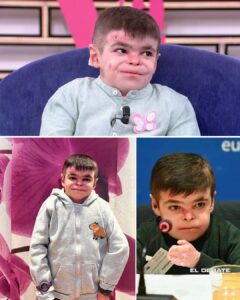
At just 12 years old, Leo García stood before European lawmakers and described something many children never have to think about: what it feels like to be afraid of playing.
Leo, from Seville, Spain, lives with dystrophic epidermolysis bullosa (EB), a rare genetic condition commonly known as “butterfly skin.”
The nickname may sound delicate.
But Leo’s daily reality is anything but.
Living With Extremely Fragile Skin
Epidermolysis bullosa can cause the skin to become extremely fragile, meaning even minor friction or a small bump can lead to painful wounds.
For Leo, this means that ordinary parts of childhood can require extraordinary care.
His day begins early. He has described starting his mornings around 7 a.m. with lengthy and painful wound care before he can even get dressed and begin the rest of his day.
Getting dressed can be difficult.
Eating can also be challenging because EB can affect areas inside the mouth and esophagus.
And then there is something many children rarely think twice about:
playing.
For Leo, playing can carry the fear that a simple accident could create another painful wound.
Leo Takes His Story to the European Parliament
In March 2026, Leo traveled from Spain to Brussels and spoke at the European Parliament about what it is like to live with butterfly skin.
He wasn’t simply describing a medical condition.
He was explaining what it means to experience childhood when everyday activities can come with pain and risk.
Leo told lawmakers that his mornings begin with painful treatment and that he sometimes needs help with basic activities such as getting dressed. He also described being afraid to play because a small impact could cause a new wound, and being afraid to eat because his esophagus can be affected.
His message was remarkably simple.
He wanted less pain.
He wanted to be able to play without constantly worrying about getting hurt.
He wanted the chance to experience more of the ordinary childhood experiences that many people take for granted.
Why Leo Was Speaking About Treatment
Leo’s appearance in Brussels was also connected to access to treatment for people living with dystrophic epidermolysis bullosa.
One treatment discussed in connection with his case was Vyjuvek, a therapy designed to help wounds heal in people with dystrophic EB. At the time of Leo’s testimony, access to the treatment in Spain was a major issue for his family and others affected by the condition.
His testimony helped bring attention to the challenges faced by people living with rare diseases and to differences in access to innovative treatments.
The story also had a significant development shortly afterward.
In March 2026, the Andalusian government announced that it would cover the cost of Vyjuvek for eligible patients in the region. By April, Andalusia announced that patients with butterfly skin, including Leo, had begun receiving the treatment through the public health system.
When Ordinary Things Feel Extraordinary
Perhaps the hardest part of Leo’s story is how ordinary the things he wants are.
He isn’t asking for a childhood completely free from challenges.
He wants to play.
He wants to eat without fear.
He wants to get dressed without beginning the day with overwhelming pain.
He wants to experience the simple moments that other children may barely notice.
A hug.
A game.
A meal.
A normal morning.
For someone living with extremely fragile skin, these everyday experiences can become precious.
A 12-Year-Old’s Message That Reached Far Beyond Brussels
Leo’s testimony brought a rare disease into the public spotlight through the voice of someone who actually lives with it every day.
His story also showed why awareness matters.
Dystrophic epidermolysis bullosa affects a relatively small number of people, but for those living with it, the condition can shape nearly every part of daily life. In Spain, estimates cited by medical sources put the number of people affected at around 500.
Leo’s words gave that statistic a human face.
Instead of simply hearing about a rare disease, people heard from a child explaining what it feels like to live inside it.
Leo’s Wish Is Simple
At 12 years old, Leo has already had to think about things that most children his age should never have to worry about.
Pain.
Wounds.
Medical care.
The possibility of injury from something as simple as playing.
Yet his message remains remarkably simple.
He wants to live with less pain.
And he wants to be able to enjoy childhood.
Sometimes, the most powerful stories aren’t about extraordinary things people want.
They’re about the ordinary things they are still hoping to experience.
For Leo, that ordinary childhood is something worth fighting for. ❤️